

Our modern suburbs have far more hard and impermeable surfaces than natural bushland areas. Roadways, driveways, roofs and paving increase the amount of water flowing into our stormwater systems then into local creeks and rivers before much of it ends up in the Bay. Higher stormwater flow carries pollutants and can cause erosion to local waterways.
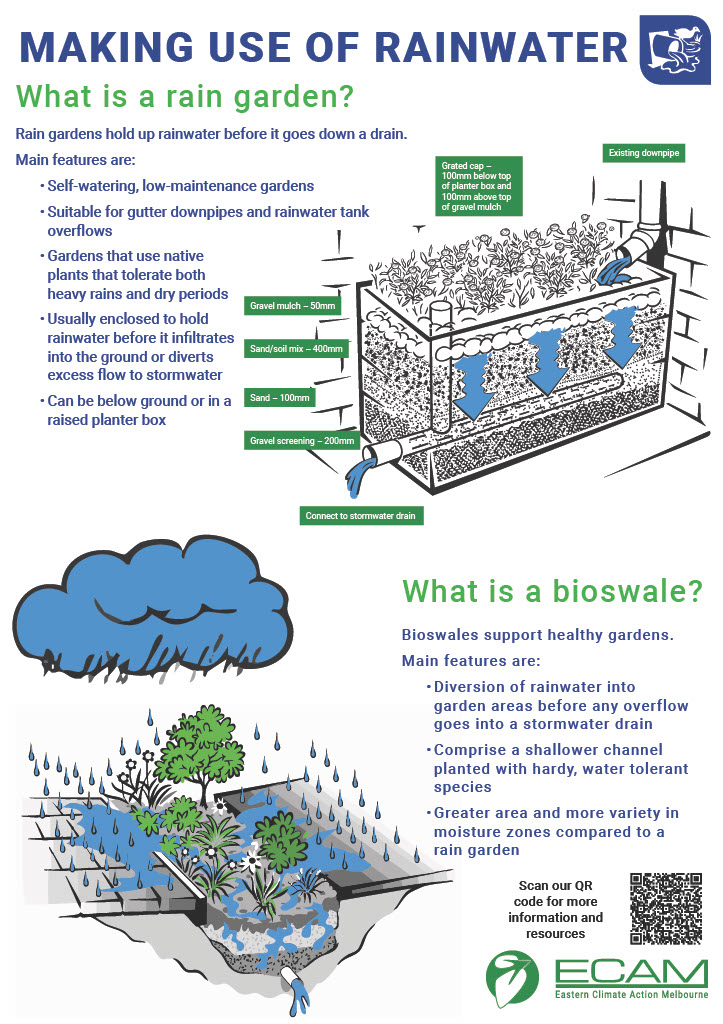
Adding a rain garden to your property – using Australian native plants = is a great way to slow down stormwater flow while also adding local habitat plants to your garden.
Maroondah Council has identified rain gardens as one way to protect local wildlife corridors such as the Dandenong-Tarralla-Bungalook Biolink.
Steps to establish a rain garden:
- Identify a suitable location such as a rainwater tank overflow or existing stormwater flow toward a stormwater pit.
- Get plumbing advice to ensure stormwater flow is away from foundations and complies with plumbing regulations and requirements.
- Come along to the ECAM Australian Native Rain Garden workshop on 18 April to hear more on rain gardens and suitable native plants.
- Send us a photo of your proposed rain garden location for a chance to receive a voucher for suitable native plants from CRISP nursery.
For the chance to get a voucher for rain garden plants, send us a photo of your proposed rain garden location and your local government area (Maroondah, etc) to ecam.enquiries@gmail.com .
Eastern Climate Action Melbourne (ECAM) acknowledges the support of Maroondah City Council’s Community Grants Funding Program.