
Howard of Maroondah
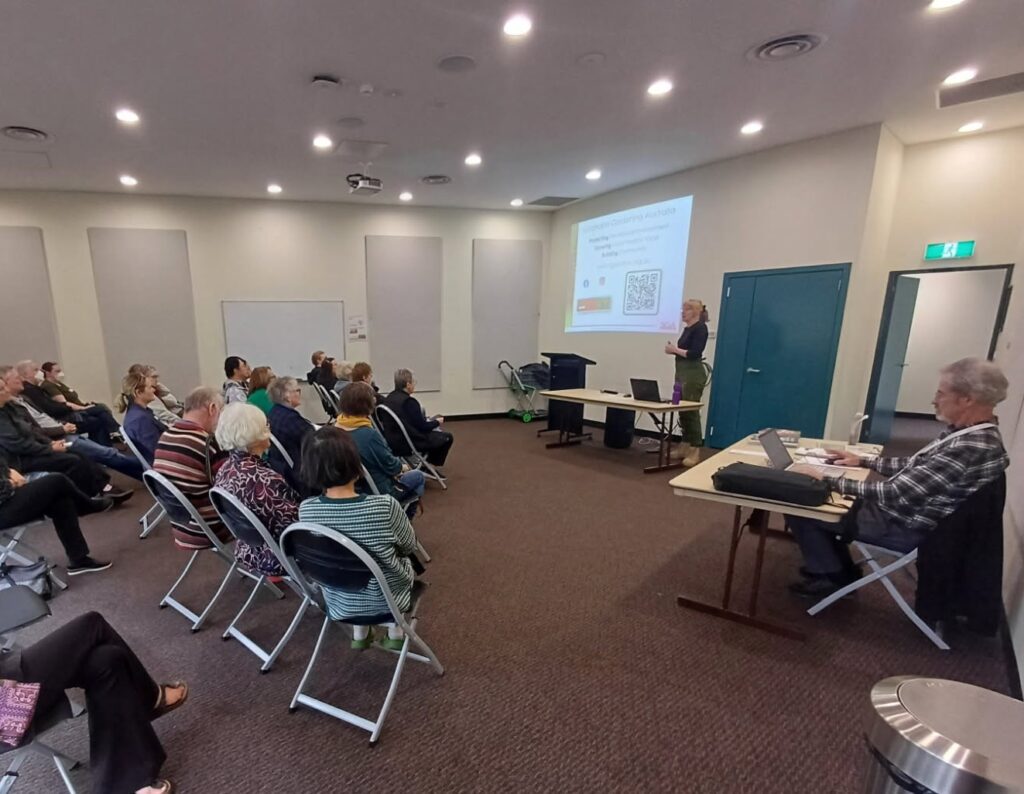
On April 18, an enthusiastic group assembled to hear Liz from Sustainable Gardening Australia talk about rainwater gardens.
Liz started by explaining the issues with stormwater in an urban environment. Hard surfaces and compacted soil means most rainwater quickly runs off the surface, washing pollutants into stormwater drains and into the local creeks But stormwater is a valuable resource. Slowing the flow gives the water more time to soak into the soil, reducing the need to use potable water for irrigation and helping to create green spaces for greater biodiversity.
Rainwater gardens are a way to slow the flow of rainwater, as well as filtering out pollutants which can build up in local waterways.
The basic design is a layer of well drained soil/gravel combined with plants that tolerate the extremes from full inundation to long dry periods. Many different designs can be used to suit different household situations. Infiltration gardens are not lined and allow most of the water to drain into the soil with any overflow going to the stormwater drain. A swale is a larger version with channels created in the garden to slow the water flow as it meanders through the landscape. Planter boxes can be installed under roof downpipes to create an attractive natural feature before the rainwater overflows to the drain.
The Melbourne Water raingarden website is an excellent resource with guidelines on how to get started and detailed instructions for a variety of raingarden styles.
Liz highlighted the four stages of creating a raingarden.
Planning is essential. There may be local regulations that affect where a garden can be constructed, it can take time to identify the optimum location in a garden, underground services might be affected by the proposed site, etc.
Building during Autumn is probably the best time as the soil isn’t too wet and the plants get a chance to settle in before a dry, hot Summer.
Plant using appropriate species, taking into account how wet or dry the different levels of the raingarden will be throughout the year.
Maintain the garden by removing any build up of litter which may find its way from the roof.
Anyone thinking about creating a rainwater garden on your nature strip must contact the local Council to discuss plans and submit an application. For example, Maroondah residents can call the Council on 1300 88 22 33 and ask for the Operations Team regarding naturestrip planting or visit the Realm service centre. Whitehorse residents can call their Council on 9262 6333 and talk to the general customer service team about the permit required for nature strip planting.
The information session finished with a visit to the CRISP nursery which sells many of the indigenous plants recommended for raingardens.
If you’d like to receive a voucher for 20 seedlings from CRISP to create a raingarden, please send a photo of your selected site to ecam.enquiries@gmail.com. You’ll receive the voucher which can be redeemed at the nursery. After your garden is constructed, ECAM would love to have another photo showing the finished work. These pictures will be shared on the ECAM website (without any address information) to inspire others to create raingardens.
Thank you to everyone who attended the information session. ECAM is looking forward to hearing about new raingardens popping up around the suburbs in the future.
Eastern Climate Action Melbourne (ECAM) acknowledges the support of Maroondah City Council’s Community Grants Funding Program for this workshop.